
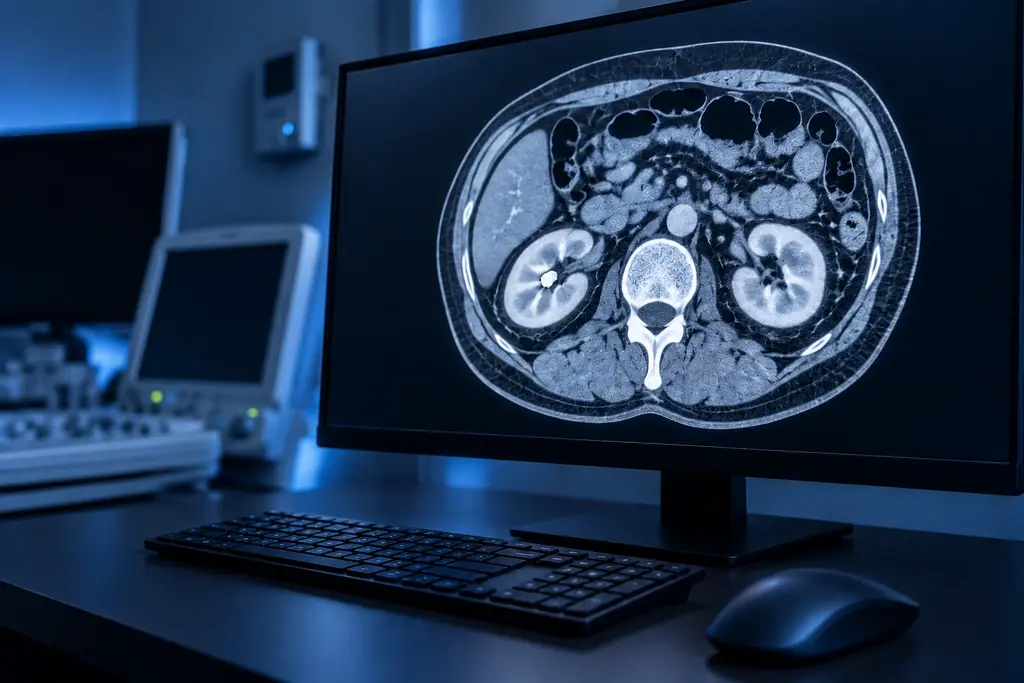
Fast, expert assessment and treatment for painful or troublesome kidney stones, from watchful waiting to ureteroscopy and lithotripsy. Kidney stone surgery removes or breaks down stones that are too large, too painful, or too slow-moving to pass on their own, using techniques ranging from shockwave lithotripsy to keyhole surgery. Not every stone needs an operation, and your consultant will explain whether surgery, or simply monitoring, is the right next step.
Kidney stones are a common and often severe urological problem, affecting around 1 in 10 people at some point in life. Mr Mohammed Aldiwani, Consultant Urological Surgeon, offers a rapid private assessment and treatment pathway for kidney stones across Leeds, West and South Yorkshire, matched to your stone’s size, location and composition, and to how urgently it needs to be dealt with.
What Causes Kidney Stones?
Kidney stones form when minerals and salts in urine crystallise, usually due to a combination of dehydration, diet, metabolic factors and, for some people, genetics. They range from tiny stones that pass unnoticed to large stones that cause severe pain (renal colic), block the kidney, or trigger infection. The right treatment depends heavily on stone size, position (kidney, ureter or bladder), and composition.
Common risk factors include not drinking enough fluids, a diet high in salt or animal protein, obesity, and a family history of stones. According to the National Institute of Diabetes and Digestive and Kidney Diseases (NIDDK), staying well hydrated is one of the most effective ways to reduce the risk of forming new stones (niddk.nih.gov).
When Is Kidney Stone Surgery Needed?
Kidney stone surgery is usually considered when a stone is too large to pass on its own (generally above 6 to 7mm), when it is blocking the kidney, when it is causing a urinary infection, or when pain relief and monitoring haven’t resolved the problem. Smaller stones lower down the ureter, and stones that aren’t causing complications, are often managed with watchful waiting first. Your consultant will weigh up stone size, position and your symptoms before recommending kidney stone surgery over continued monitoring.
Your Treatment Options
Kidney stone treatment is offered across a comprehensive range of modern techniques for patients across Leeds, West and South Yorkshire, chosen to match your stone rather than a one-size-fits-all approach.
Watchful waiting
Monitoring with pain relief while a small stone passes naturally
First line
Lithotripsy (ESWL)
Shockwaves from outside the body break up small-to-medium stones
Non-invasive
Ureteroscopy
Telescope passed via natural passages to treat stones with a laser
Minimally invasive
PCNL
Keyhole removal directly through the back for larger stones
Referral cases
Currently offered in-house: lithotripsy and ureteroscopy, alongside watchful waiting where appropriate. PCNL would require external referral.
How You Are Assessed
Your assessment begins with a full consultation, a discussion of your symptoms and medical history, followed by an examination and any investigations needed to reach a diagnosis. This typically includes:
01
Urgent pain assessment: If you're in acute pain, you're seen promptly and, where needed, directed to emergency care first.
02
CT KUB scan: The gold-standard scan for confirming stone size, number and exact location. Ultrasound or other imaging may also be used where appropriate.
03
Urine and blood tests: To check for infection, kidney function, and clues to what caused the stone.
04
Metabolic review (recurrent stones): For patients with repeated stones, further testing can help identify and reduce future risk.
This assessment pathway follows the approach recommended by the National Institute for Health and Care Excellence (NICE) for the assessment and management of renal and ureteric stones (NICE guideline NG118), ensuring the diagnostic route is consistent with current UK best practice before any decision on kidney stone surgery is made.
Frequently asked questions
How quickly can I be seen for a kidney stone assessment?
Kidney stone pain can be severe, so private assessment is arranged as quickly as possible, often within days, with a CT scan to confirm the diagnosis at the first visit where needed.
Will my kidney stone pass on its own?
Many smaller stones (typically under 5–6mm) pass naturally with pain relief and monitoring. Larger stones, or stones causing infection or blocking the kidney, usually need active treatment.
What is the difference between lithotripsy and ureteroscopy?
Lithotripsy uses shockwaves from outside the body to break up stones, requiring no incisions or scopes. Ureteroscopy passes a thin telescope through the natural urinary passage to see and treat the stone directly, often with a laser.
Can kidney stones come back?
Yes, around half of people who form one stone will form another within several years. Simple dietary and fluid advice, and metabolic testing for recurrent stone formers, can meaningfully reduce this risk.
Do you treat kidney stone patients from across Yorkshire?
Yes. Mr Aldiwani sees patients from across West, North and South Yorkshire, including Bradford, Wakefield, Harrogate, York and Sheffield, at the clinic in Leeds, with fast appointments for painful stones.
Is kidney stone surgery painful?
Kidney stone surgery is carried out under anaesthetic, so you shouldn’t feel pain during the procedure itself. Afterwards, mild discomfort, some blood in the urine, or stinging when passing urine is common for a few days and is usually managed with simple pain relief.
Book an assessment
New consultation £220
Follow-up £150
Recognised by BUPA, AXA, Aviva, Vitality, Cigna, Healix, WPA, and all major private healthcare insurers. If your insurer is not listed, please contact the clinic team to verify coverage.
Quick facts
Common symptoms
Flank/loin pain, blood in urine, urinary infection
Diagnosis
CT KUB scan (fast, highly accurate)
Treatment options
Watchful waiting, lithotripsy, ureteroscopy, PCNL (referral)
Recovery
Often day case; 1–2 weeks light recovery